Beyond Redlines: How "Collaboration Before Approval" Ends Bottlenecks
Legal, Risk, and Relationship Managers often work in silos. For documents, this approach means version chaos, reactive compliance and wasted effort.
Here is a costly, all-too-common scenario in corporate banking: a nearly-final loan agreement lands on Legal’s desk, and their necessary changes, based on risk or new compliance rules, trigger a cascade of rewrites and restarts.
This is the old way of working. Traditional workflows introduce Legal and Compliance far too late in the process. By the time they see a draft, the deal has momentum, and any change feels like a roadblock. This isn’t just inefficient; it’s expensive. Research from World Commerce & Contracting shows that inefficient contracting processes can cost firms up to 9% of their annual revenue, often due to these delays.
This friction is a direct result of a process that prizes sequential review over simultaneous collaboration.
The Silo Problem
In most banks, Legal, Risk, and Relationship Managers work in silos. They use different tools and communicate via email attachments. This “over-the-wall” approach means:
- Version Control Chaos: Multiple “v_final_2” copies of a document circulate, with no one certain which is the true source. This creates duplication and delay.
- Reactive Compliance: Legal and Compliance are forced to be “gatekeepers” who correct errors, rather than partners who prevent them.
- Duplication of Effort: Changes made by one team may conflict with the needs of another, forcing the Relationship Manager to mediate and restart the process.
This is the primary bottleneck that contributes to the 6+ week onboarding delays that cause 70% of financial institutions to lose clients.
The Solution: A Unified Platform for Collaboration
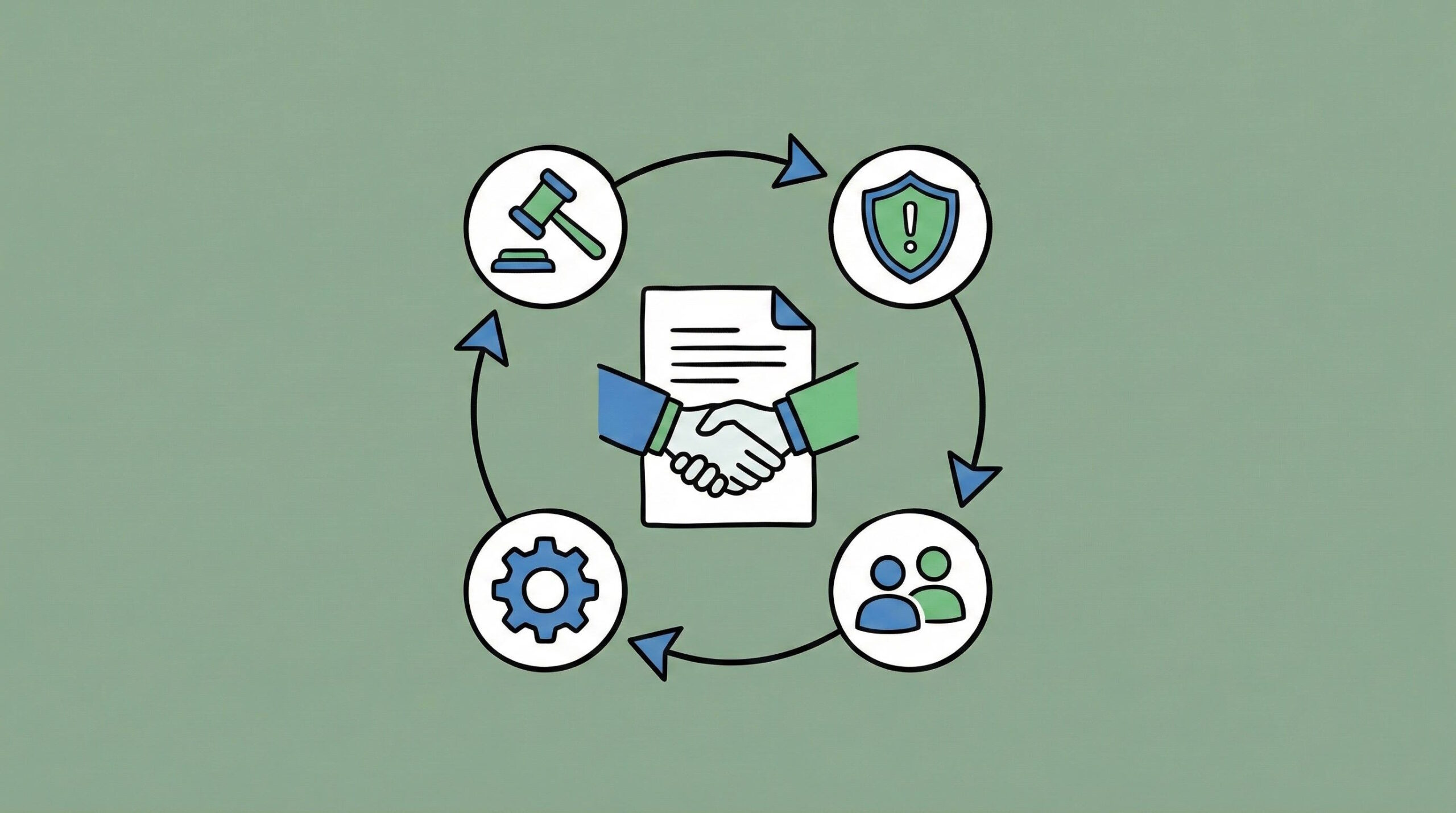
Modern document automation flips this broken model. It enables collaboration before approval by providing a single, shared environment for all stakeholders.
Imagine this: Legal, Risk, and Relationship Managers co-authoring in real-time, on the same version, from the very start. With tracked edits and role-based permissions, compliance is ensured before the approval stage even begins.
By keeping the entire collaboration inside your Salesforce instance, you eliminate external email chains. Legal and Compliance are no longer gatekeepers; they are partners in the drafting process.
Why This Changes Everything
This “shift-left” approach, where compliance and legal review happen from day one, has profound benefits. The entire workflow, from dynamic generation using Salesforce data to e-signature, lives in one place . Legal can manage their approved clauses in a central library, knowing they will be used correctly from the first draft.
Speed doesn’t come from skipping reviews or cutting corners. It comes from sharing the same document from the start. This alignment reduces duplication, ensures compliance, and allows banks to finally move at the speed of their clients.
Learn more about the benefits of document automation for banks: Download our E-guide on document automation in corporate banking.